
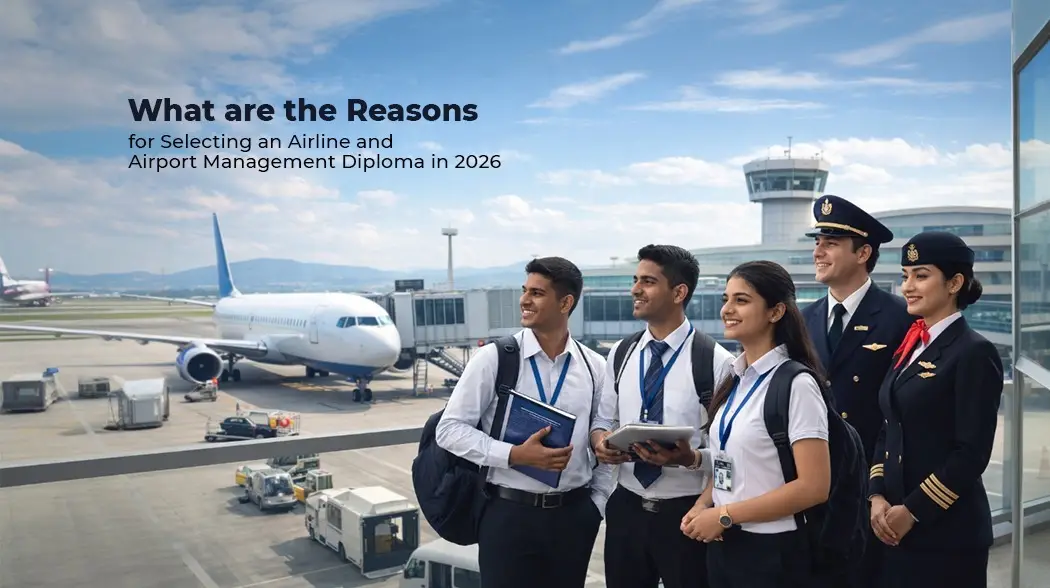
What Are the Reasons for Selecting an Airline and Airport Management Diploma in 2026
Choosing a career path after school or graduation often becomes a confusing decision for many students. There are several industries that offer promising opportunities today. However, the aviation sector continues to attract attention because of its global reach and consistent growth. Many young professionals now consider aviation training programs as a practical way to begin their careers.
This is where a diploma in airline and airport management becomes relevant. The program prepares students for roles that involve airline operations, passenger handling, airport coordination, and travel services. If someone is planning to build a career in aviation or tourism, enrolling in professional airline courses can be a sensible first step.
Let us understand why this field is gaining popularity in 2026.
The Aviation Industry Is Expanding Rapidly
The aviation industry has witnessed remarkable growth in recent years. New airports are being constructed as the old airports keep increasing their operations. As more airlines enter the market, the demand for trained professionals also increases.
Because of this growth, airlines require staff who understand airport operations, passenger services, ticketing systems, and travel procedures. A diploma in airline management helps students learn these practical skills in a structured way.
When students complete specialised airline courses, they become familiar with the functioning of airline companies along with airport operations. This knowledge helps them adapt quickly once they enter the industry.
Growing Demand for Skilled Aviation Professionals
One of the biggest reasons students choose a diploma in airline and airport management is the increasing demand for trained professionals. Travel companies and airlines would want to hire candidates who are already familiar with the operational systems in the industry.
There are several duties of airport management. Employees deal with the coordination of passengers, boarding, airline reservations, and travel documents. Without proper training, managing these tasks becomes difficult.
This is why many institutes now offer professional airline courses that focus on practical learning. These programs help students understand airline systems, travel procedures, and airport management workflows before entering the workforce.
Opportunity to Work in a Global Industry
The aviation sector is one of the few industries that operates across international boundaries. Airports have a global transportation system that links cities and countries. Due to this arrangement, the aviation professionals are frequently exposed to individuals in other regions of the globe.
Airline management diploma equips students to operate in such a dynamic environment. The training normally covers airline language, travel geography, passenger handling and ticketing systems.
Holders of a diploma in airline and airport management have a chance to pursue a career in the airlines, airports, travel agencies, and tourism companies. This global exposure is one of the reasons why aviation careers remain attractive to many students.
Practical Training Builds Industry Readiness
Another reason students prefer aviation training programs is the practical nature of the curriculum. Many professional institutes design airline courses that combine theory with real system practice.
Students learn how airline reservations work. They also understand how ticketing systems function, along with fare calculation and itinerary planning. This type of training prepares them for the daily responsibilities handled by airline and travel industry professionals.
A well-structured diploma in airline management introduces students to airline booking systems, passenger handling procedures, and airport operations. This exposure helps students feel confident when they begin working in the industry.
Wide Range of Career Opportunities
There are various career opportunities in aviation training. Airports and airlines need employees in various departments, and this implies that students have an opportunity to experiment with various jobs depending on their interests.
Graduates with a diploma in airline and airport management often find opportunities in the following areas.
- Airline reservation executive.
- Airport ground staff.
- Travel consultant.
- Tour operations executive.
- Visa documentation assistant.
Professional airline courses equip students with the knowledge needed to handle airline bookings, travel planning, and passenger services. These roles form the backbone of the aviation and tourism industry.
Suitable for Students After 12th Grade
Many students begin searching for career-oriented courses immediately after completing their schooling. A diploma in airline management becomes an attractive option because it does not require years of academic study.
Most aviation diploma programs are designed to provide professional training within a shorter time frame. Students can learn essential industry skills and begin working sooner.
A diploma in airline and airport management helps students understand how the aviation industry operates. Along with technical training, they also develop communication skills and customer service abilities, which are essential for airline careers.
A Career That Combines Travel and Professional Growth
For many students, the aviation industry offers something unique. It combines career growth with the excitement of working in an international environment.
When students enrol in professional airline courses, they gain knowledge about global travel systems, airline networks, and airport management processes. This exposure helps them understand how the travel ecosystem functions.
An airline management diploma is a well-planned course that not only equips students with employment opportunities but also instills confidence in them to deal with real-life travel operations. This learning and exposure to the industry has remained appealing to students in aviation programs.
Conclusion
The aviation industry is an expanding industry with the world travelling more annually. Airports and airlines need trained individuals to learn how to handle passengers, what to do with ticketing, and how to travel. Due to such industry requirements, aviation training programs are increasingly gaining popularity among students.
A diploma in airline and airport management provides the knowledge required to begin a career in this fast-paced industry. Students would have the opportunity to acquire the skills required to work in airlines, airports, and travel companies with proper training and guidance. For individuals interested in aviation, professional airline courses can become the foundation for long-term career growth.
FAQs
- What is an airline and airport management diploma?
Ans. A diploma in airline and airport management is a professional training course that educates students on airline operations, airport management, ticketing systems, and passenger services applied in the aviation and travel sector.
- Who is eligible to take airline courses?
Ans. Most airline courses are open to students who have finished their 12th grade. There are also some programs that can be offered to graduates who wish to begin their careers in aviation, travel agencies, or tourism management.
- What are the career prospects of a diploma in airline management?
Ans. Having graduated with a diploma in airline management, students may be employed as airline reservation executives, airport ground staff members, travel consultants, or tour operation professionals in airlines and travel companies.
- Is the aviation profession a good choice in 2026?
Ans. Yes, the aviation industry is expanding with the rise in international travel. The diploma in airline and airport management enables students to acquire the industry knowledge needed to work in airlines, airports, and travel management firms.
