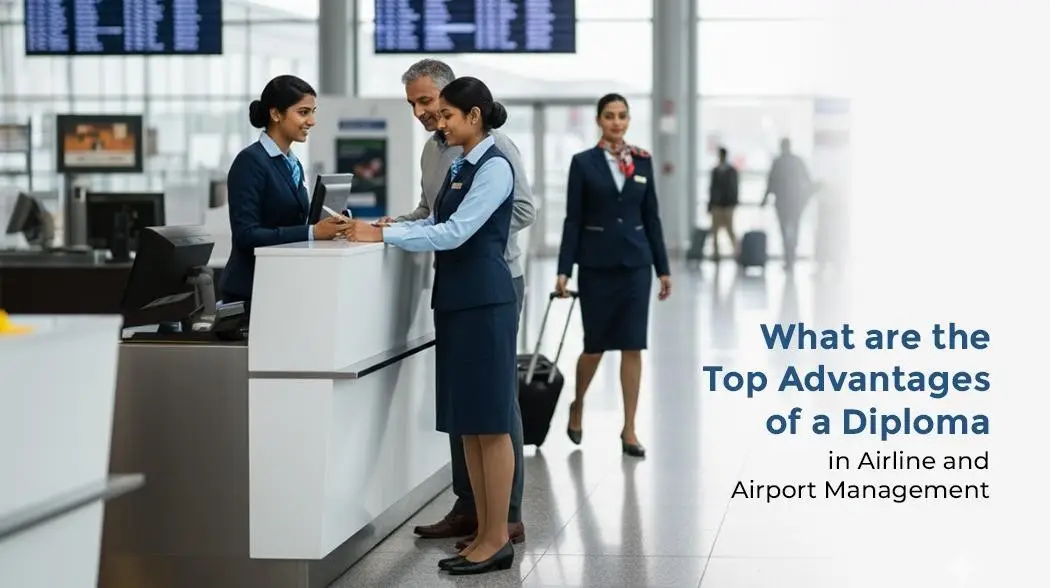
What are the Top Advantages of a Diploma in Airline and Airport Management
The aviation industry operates on precision. Every departure follows a schedule. Every passenger movement follows a process. Airports function through coordination between departments. This environment leaves little room for error.
Many students are attracted to airline careers but do not understand operational depth. A structured diploma in airline management provides clarity about how airlines function. It explains ground operations along with passenger handling and ticketing systems. That clarity builds confidence before entering the workforce.
Clear Understanding of Airline Operations
Airlines depend on coordinated teams. Check in staff manage boarding passes. Ground staff handle baggage flow. Operations teams monitor flight schedules.
A professional diploma in airline and airport management introduces students to these workflows. It explains how departments interact. It teaches how disruptions are handled. When students understand the system they are better prepared for real roles.
Exposure to aviation standards reduces hesitation during interviews. It allows candidates to speak with confidence about procedures.
Practical Skills That Employers Expect
Airports and airlines require discipline. They expect accuracy in documentation. They expect professional conduct during passenger interaction.
A structured diploma in airline management develops both technical and service skills. Students learn check in procedures along with security protocols and customer handling. They practise scenario based exercises that simulate real work conditions.
This preparation shortens the adjustment time after hiring. Employers prefer candidates who understand the workflow before joining.
Strong Foundation in Airport Environment
Airport operations involve coordination between security teams and airline counters and boarding gates. Understanding this environment is important for career growth.
A recognised diploma in airline and airport management explains terminal operations. It covers passenger assistance along with baggage coordination and safety guidelines. Students gain insight into how the airport ecosystem functions.
This exposure prepares candidates for roles in domestic as well as international terminals.
Career Opportunities Across Departments
The aviation sector offers multiple entry-level roles. Graduates of a recognised diploma in airline management can work as ground staff. They can join airline counters as customer service agents. They can support boarding coordination.
A comprehensive diploma in airline and airport management also opens opportunities in airport management support roles. With experience, candidates may move into supervisory positions.
Students who understand travel and tourism management concepts gain additional flexibility. They can transition between airline roles and broader tourism operations. This versatility strengthens long-term career options.
Professional Grooming and Communication
The interaction with passengers takes time. It involves transparency in communication. Airports deal with travellers from various regions and origins.
A special diploma in airline management enhances verbal English, as well as professional presentation. Students get to know how to handle stressful circumstances. They know how to portray an airline brand in the right way.
This development is enhanced by training in travel and tourism management, which helps in strengthening the service standards. Preparation that is balanced enhances confidence in the process of handling passengers.
Formalised Career Advancement Path
There is consistency and discipline in aviation careers. The first positions offer exposure to real-time work. Progression is developed through experience coupled with systematic learning.
The foundation is provided by a properly designed diploma in airline and airport management. It trains students towards the accuracy of operations. It trains them on how to coordinate teams.
Knowledge in travel and tourism management concepts also facilitates the uphill climb into administrative or management careers with time.
India Travel and Tourism Institute is a higher learning institution that offers professional courses to equip the students with aviation jobs through hands-on training supplemented with career counselling and industry-based learning.
FAQs
- What are the employment opportunities after doing a diploma in airline management?
Depending on training and exposure, graduates can be employed as ground staff, customer service agents, boarding coordinators or airport operations assistants.
- Does the course in airline and airport management make a good post-graduate?
Yes, it offers industry-related knowledge and hands-on training, which enhances job preparation in the aviation industry.
- What is the relationship between airline careers and travel and tourism management?
Travel and tourism management enhances the knowledge of the customer service operations and booking systems that aid the airline functions.
- Are there practical airport training programs in these programs?
A large number of organised programs involve simulation games as well as exposure to operations to equip the student to work in the real world setting.
- Will this diploma result in foreign aviation employment?
Yes, those who have good communication skills and an understanding of the operations can pursue opportunities in the international airports.
- Does it include communication training in the program?
The majority of professional diplomas involve personality development and communication training in order to enhance the skills of interacting with passengers.