How a Diploma in Tourism and Hospitality Unlocks Careers in the Travel Industry
The travel industry looks attractive from the outside. People see airports along with aircraft and hotels. What they do not see is the system behind every booking. Travel operations depend on accuracy. They depend on trained people who understand the process clearly.
Many students want to enter aviation or tourism but feel unsure about the first step. A structured diploma in tourism provides direction. It explains how bookings work. It explains how ticketing rules apply in real situations. This clarity reduces confusion at the start of a career.
Why Structured Training Matters
Interest alone is not enough to build a career. The travel sector expects practical knowledge. Agencies expect system familiarity. Airlines expect accuracy in documentation.
A professional diploma in travel and tourism prepares students for these expectations. It introduces reservation systems along with fare structures and itinerary planning. This exposure builds confidence before entering interviews. Students are able to explain processes instead of guessing answers.
Recognised travel and tourism courses focus on application. They teach how to issue tickets. They teach how to modify bookings. They teach how to respond to client queries. Skill based learning improves job readiness.
Understanding Reservation Systems
Global distribution systems are central to the industry. Platforms such as Amadeus along with Galileo are widely used by agencies. Employers prefer candidates who already understand these tools.
A structured diploma in tourism that includes system training builds technical strength. Students practise live booking simulations. They learn how to calculate fares correctly. They understand cancellation rules as well as reissue procedures.
Completing a diploma in travel and tourism with practical exposure increases hiring chances. It shows that the candidate can work with accuracy from day one.
Communication and Professional Conduct
Travel roles require regular client interaction. Professionals handle schedule changes along with urgent requests and documentation concerns. Clear communication reduces errors. Calm responses build trust.
Well designed travel and tourism courses include personality development. They improve spoken English. They strengthen professional conduct. A balanced diploma in tourism prepares students for both technical tasks and client facing roles.
Professional growth depends on how well a candidate manages responsibility. Training creates discipline. Discipline builds reliability in the workplace.
Career Opportunities After Completion
The travel sector offers multiple entry roles. Graduates of a recognised diploma in travel and tourism can work as ticketing executives. They can join agencies as reservation staff. They can support corporate travel desks as well as tour operations.
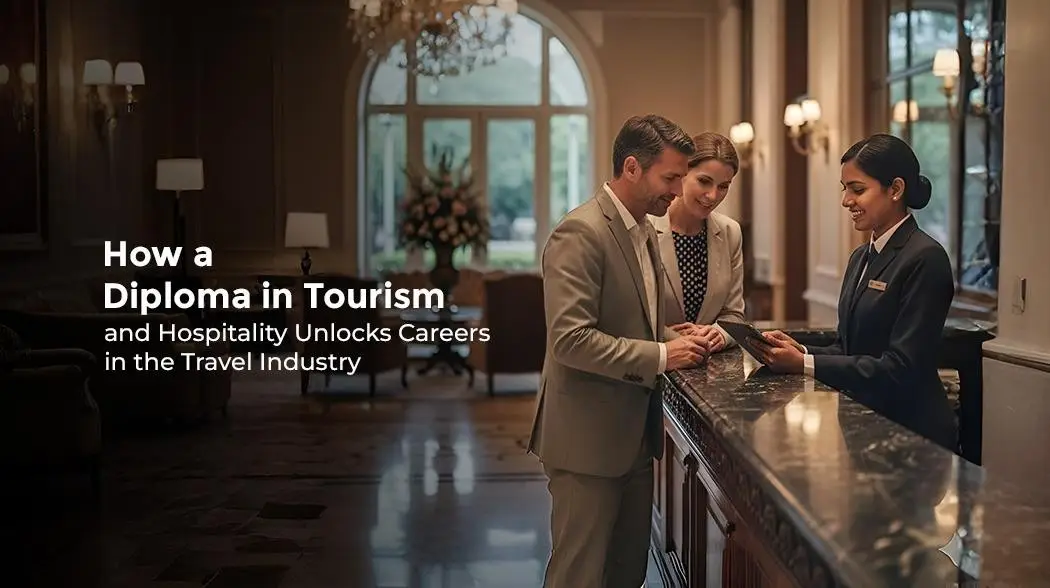
A practical diploma in tourism also opens opportunities in hospitality support roles. Hotels require trained front office professionals. Tour companies need itinerary planners. Structured travel and tourism courses prepare students for these pathways.
Progress is accumulated by experience. Over time, the professionals are shifted into supervisory roles. They are involved in the coordination of teams as well as client management.
Career Direction and Pacement Support
Training builds knowledge. Placement support creates confidence in a job search. Career guidance is beneficial to students when it is included in the program.
A diploma in travel and tourism that is recognised, together with placement assistance, minimises uncertainty. Preparation in an interview enhances performance. Opportunity is enhanced by industry relations.
Travel and tourism courses are well-organised courses that bridge the divide between classroom and employment. A specialised degree in tourism equips one with the right mindset to join the job market.
India Travel and Tourism Institute offers professional training that is aimed at equipping students to work in the real industry. Its programs are a blend of technical education, system exposure, and career guidance to enable long-term development.
FAQs
- So what are the employment opportunities available upon graduation with a diploma in tourism?
Depending on the training and level of skills, graduates can serve as ticketing executives, reservation agents, ground staff, or corporate travel coordinators.
- Is a travel and tourism diploma the right course for fresh graduates?
Yes, it gives practical knowledge as well as system training, which enhances job preparedness among students joining the industry.
- Are there travel and tourism courses with training on the GDS system?
To gain technical competence, most professional programs are offered to train on platforms like Amadeus and Galileo.
- What is the duration of a diploma in the tourism field?
Programs can take different durations; however, most structured programs take a period of several months or a year.
- Does it offer placement assistance on the completion of the course?
There are numerous institutes that provide interview training and career advice to assist students in finding a job.
- Does a travel and tourism degree result in foreign opportunities?
Yes, applicants possessing good system knowledge and communication skills will have an opportunity to pursue jobs both in the local and international markets.