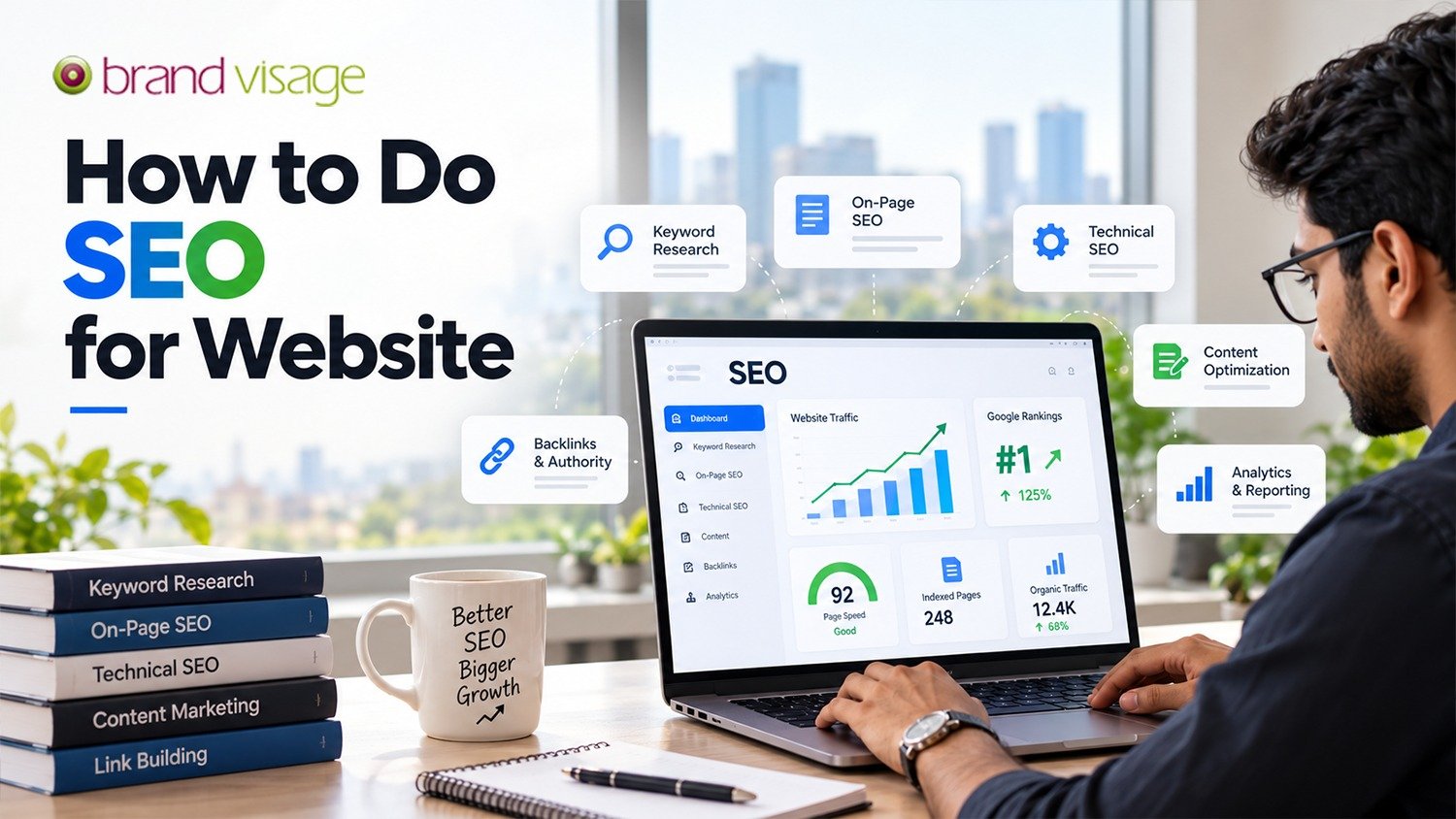
How to Do SEO for a Website: A Practical Guide for Beginners
You have a website. Your products or services are listed, the design looks good, and everything seems to work. There is just one problem: people aren’t finding you on Google.
This is more common than you might think. Building a website is one job, and getting people to visit it is another. So how do you do SEO for a website without getting lost in technical terms? Start with a few basics. You don’t have to fix everything at once. What matters is knowing what to work on first.
1. Find out what people are searching for
Before you write a blog post or change a page, think about what your customers actually type into Google. If you run a bakery in Delhi, people are more likely to search for “birthday cake delivery in Delhi” than just “bakery.” A search like that tells you what the person wants, and it helps you decide which pages to create.
Make a list of relevant search terms. Google’s search suggestions, competitor websites, and keyword research tools are all good places to look for ideas.
Don’t pick a keyword only because it has high search volume. It should match your business and the page you want people to land on. This is the first step in learning how to do SEO for a website in a way that brings the right visitors, not just more of them.
2. Work on your existing pages first
You don’t need to publish ten blog posts before fixing your main pages. Start with your homepage, service pages, and product pages. Do they explain what you offer and who you serve? If a visitor can’t understand your business within a few seconds, the page needs work.
This is where on-page SEO comes in. Put relevant keywords in your page title, main heading, URL, and body text, wherever they fit naturally. Write a meta description that tells people what the page is about, and give your images descriptive alt text.
A page about website design services, for example, should explain the service, describe your process, and show how someone can contact you. Good on-page SEO isn’t about repeating the same keyword in every paragraph. It is about making each page clear and useful.
Want to know more about on-page SEO than reading this blog: what is on-page SEO
3. Make sure Google can find your website
Sometimes the content is fine and the problem is access. Google may have trouble reaching or indexing your pages, which is why technical SEO matters.
Use Google Search Console to check whether your important pages are indexed. Submit your XML sitemap, fix broken links, and look for pages that are blocked from search engines by accident.
Your site also needs to work well on a mobile phone. People expect pages to load quickly, and a slow or awkward site frustrates them. If you use WordPress or another content management system, some of these fixes are simple. Others may need a developer. Don’t skip these checks just because they sound technical.
What to know more about technical SEO: What is technical SEO
4. Write blogs that people actually need
A blog can bring visitors to your website, but only if it answers something they want to know. If you sell skincare products, another general article about skincare adds little. A guide to building a basic routine for oily skin, or what to look for in a sunscreen, is far more useful.
Choose topics connected to your products or services. Answer the main question early, and add examples where they help. If an older post has outdated information, update it.
You don’t need to publish every day. A few useful articles are better than a pile of pages that say very little. A good SEO company in Delhi will understand this, because content needs a purpose beyond adding one more URL to your site.
5. Build links from other websites
Google can discover pages through links, and links from other websites also help people find your business. This is where off-page SEO comes in: the work done outside your own site to build your online presence and authority.
Some useful off-page SEO techniques include writing an expert article for a relevant industry website, working with genuine business partners, and sharing original research that others may want to refer to. The focus should be on earning relevant links, not on collecting as many as possible.
Avoid buying large numbers of low-quality backlinks or getting links from unrelated sites. Shortcuts like these can do more harm than good. Off-page SEO takes time, so don’t expect a handful of links to change your rankings overnight.
6. Connect your pages properly
Have you ever visited a website where finding basic information felt like a chore? You click one page, go back, open another, and still can’t find what you came for. Your own site shouldn’t work that way.
Add internal links between related pages. A blog post about website design can link to your website development service page, and a service page can link to a relevant case study if you have one. These links help visitors move around your site and give search engines more context about how your pages relate to each other.
A clear navigation menu and a sensible page structure help too. You don’t need a complicated website. You need one that people can use without thinking too hard.
7. Check what’s working
SEO isn’t something you finish and forget. Use Google Search Console to see which searches bring people to your site and which pages get impressions and clicks. Google Analytics can show what visitors do once they arrive.
You may find that one service page gets plenty of impressions but few clicks, while another attracts fewer visitors but more inquiries. Both findings tell you what to improve. This is how to do SEO for a website in a practical way: make changes based on what your data shows, not on guesses.SEO
Give your changes time to show results. SEO takes patience, and rankings can move up and down along the way.
Need help with your website’s SEO?
You can handle some SEO tasks yourself, especially if your website is small. But when technical issues, content, and link building start piling up, an experienced team can make the work easier to manage.
Brand Visage Communications offers SEO, website development, and other digital marketing services. If you’re looking for an SEO company in Delhi, get in touch with us to find out how we can support your website and your wider marketing goals.
A good SEO agency should start by understanding your business, your audience, and your current website. It should then explain what needs attention and how progress will be measured.
No single trick will take every website to the top of Google. Start with the basics, fix problems as you find them, and keep improving the pages that matter to your customers. That is a much better starting point than trying to do everything at once.
FAQs
1. How to do SEO for website pages?
Start with keyword research, then improve your page titles and headings and create genuinely useful content. Check that Google can index your pages. Work on technical SEO as well as on-page SEO, and keep an eye on your results in Google Search Console.
2. What is on-page SEO?
On-page SEO means improving the elements within your website, such as content, headings, titles, URLs, images, and internal links. The aim is to make each page clearer for visitors and for search engines.
3. What is off-page SEO?
Off-page SEO covers the activities outside your website that build its reputation and visibility. Earning relevant backlinks and being mentioned by credible websites are common examples.
4. Which off-page SEO techniques should beginners use?
Begin with useful content that others will want to share, genuine industry relationships, relevant guest contributions, and business listings where they make sense. Avoid spammy link-building methods, which can hurt your site more than they help.
5. Why is technical SEO important?
Technical SEO helps search engines access, crawl, and index your website. It also covers broken links, mobile usability, and site speed. If search engines can’t reach your pages properly, even excellent content may not be seen.
6. How do I choose an SEO company in Delhi?
Look for an SEO company in Delhi that explains its process, reviews your website before making promises, and reports on meaningful results. Ask how it handles technical SEO, on-page SEO, and off-page SEO, and be careful with anyone who guarantees rankings.
7. How long does SEO take to show results?
It depends on your website, your competition, and the work required. Some improvements can show up sooner, while building steady organic traffic can take several months.
8. Should I hire an SEO agency or do SEO myself?
You can handle the basics yourself if you have the time to learn. An SEO agency may be worth it when you need help with technical issues, content planning, and off-page SEO techniques, or when you simply don’t have the time to manage it all.

You may also like

12 Google Ads Mistakes That Waste Your PPC Budget