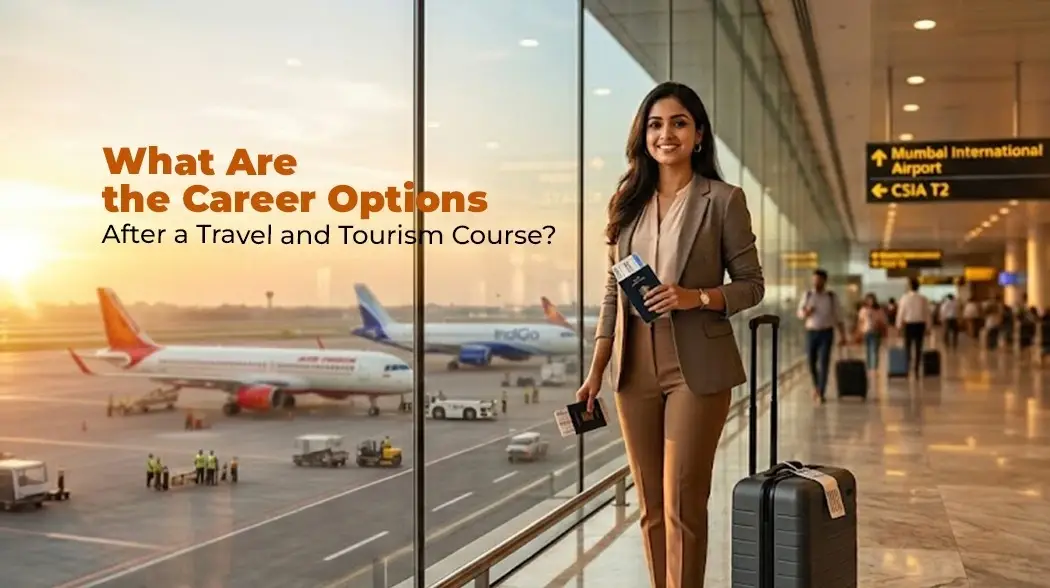
What Are the Career Options After a Travel and Tourism Course?
Not everyone who enters a new course is thinking about the long term from day one. In many cases, people join because the field sounds interesting or because it feels different from the usual options. Travel and tourism is one such field where curiosity often comes before clarity.
If you are considering a tours and travels course, then you are not just choosing a subject. You are stepping into an industry where no two days feel exactly the same. Still, a common question remains in the background. What happens after the course is completed, and where does it actually lead?
Let us look at this from a practical point of view.
Why This Field Feels Different From The Start
One thing that becomes clear quite early is that a Tourism course does not prepare you for a single fixed role. Instead, it introduces you to a mix of responsibilities that involve people, planning, and constant coordination.
You may notice that some students enjoy interacting with others, while a few prefer handling things quietly from behind the scenes. This difference matters because the industry offers space for both kinds of individuals.
It is not about fitting into one role. It is more about finding where you naturally perform better over time.
When Talking To People Becomes Your Strength
There are individuals who find it easy to guide others, even in situations where details are unclear. For them, becoming a travel consultant after a certificate course in travel and tourism often feels like a natural step.
In this role, conversations are not always straightforward. A traveller may come with a vague idea, and it becomes your responsibility to shape it into a clear plan. This process requires patience and a good understanding of preferences.
You may also realise that people do not always return for the cheapest option. They return when they feel understood.
When You Prefer Movement And Fast Decisions
Some people do not enjoy sitting in one place for too long. They prefer environments where things keep moving, and decisions have to be made quickly. For them, roles in aviation after a tour and travel course can feel more engaging.
Working around airports or airline operations means handling situations that cannot be delayed. Flights run on time, and people expect quick responses. This creates pressure, but it also builds confidence.
Over time, you start trusting your ability to handle unexpected situations without hesitation.
When Planning Feels More Comfortable Than Speaking
Not everyone enjoys constant interaction. Some individuals feel more confident when they are organising things instead of explaining them. In such cases, tour operations become a suitable direction after completing a Tourism course.
Here, the focus shifts to planning routes, managing bookings, and ensuring everything aligns correctly. It may seem quiet from the outside, but there is always something happening in the background.
You begin to notice how small details can affect the entire travel experience.
When Structure And Stability Matter More
There are also people who prefer working in a more organised environment, where processes are defined, and expectations are clear. Corporate travel management becomes a strong option after a certificate course in travel and tourism.
In this role, you are not planning holidays. You are managing travel for professionals who follow strict schedules. Every decision must be accurate and timely.
This type of work teaches discipline and builds a different level of responsibility.
When The Idea Of Building Something Of Your Own Stays In Mind
Some individuals do not enter the industry just to work under someone else. They observe, learn, and slowly start thinking about building something on their own. After completing a tour and travels course, this thought becomes more realistic.
Starting a travel business is not only about bookings. It involves understanding customer expectations, building reliable connections, and maintaining consistency.
It is not an immediate step, but it becomes possible with experience.
What Actually Helps You Grow In This Field
While roles may differ, a few abilities remain important across all paths after a tourism course:
- The ability to understand what a person is really asking, even when they are not clear.
- The habit of staying organised when multiple tasks demand attention at the same time.
- The patience to handle delays, changes, and last-minute issues without losing control.
- The awareness to notice small errors before they turn into bigger problems.
These are not taught only through theory. They develop through practice.
Why People Continue To Choose This Industry
You might wonder why this field continues to attract new students every year. The answer is not only about travel. It is about how closely this industry connects with everyday needs.
People commute to work, to family, to study and even without a clear purpose. This continuous process creates a continuous demand of trained professionals who are familiar with the process.
Individuals who have undertaken a certificate course in travel and tourism usually discover that opportunities are not always in one direction.
Conclusion
Travel and tourism is not a subject that one majors in with the aim of following a predefined path. It is all about finding your strengths in an ever-changing industry. People are involved in roles and those concerned with planning but all these are a part of the bigger experience.
In case you want to have a structured learning and at the same time have a practical exposure, The India Travel and Tourism Institute (ITTI) in Delhi has specific programmes that can enable you to know the industry and be ready to get the real opportunities in the future.
FAQs
- What are the types of jobs I can get after taking a course in travel and tourism?
You can work in roles that you are comfortable with such as customer-facing roles, back-end planning roles, aviation support, or corporate travel coordination. Every direction relies on your strengths.
- Is communication the most significant skill in this area?
Communication is good, but not the only factor. Organization, patience and ability to cope with changing situations are also crucial to long-term success.
- Will I be able to change jobs in the future in case I begin in one field?
Yes, this is a flexible business. The majority of the professionals begin in a certain position and gradually shift to another one as they get more experienced and get to know more about what they prefer.
- Does it have long-term career development in this field?
Yes, development is founded on how you build experience. The better you know the industry, the higher you can climb to specialized jobs or even consider starting your own business.

You may also like
What is the best course for 12th Pass Students in Travel & Tourism?
Can You Build a Career in Travel Without a Traditional Degree?