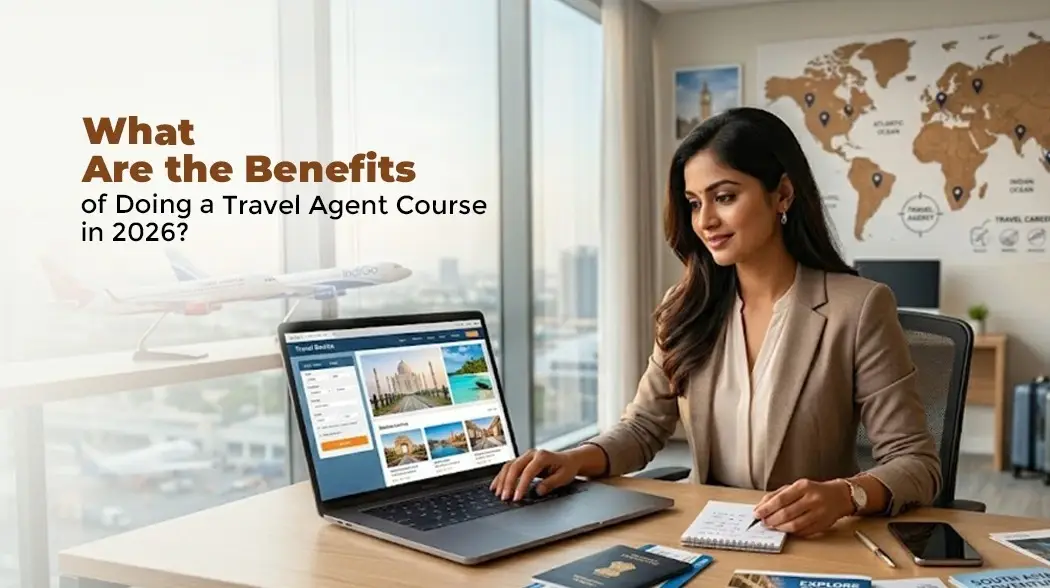
What Are the Benefits of Doing a Travel Agent Course in 2026?
Planning a trip sounds exciting until you actually sit down to do it. One tab turns into ten, and suddenly you are comparing prices, reading reviews, and still feeling unsure about what to book. At some point, most people realise that having the right knowledge makes things much easier. This is exactly where a travel agent course starts to make sense, especially in 2026 when the industry expects more than basic booking skills.
Travel Today Is Not As Simple As It Looks
A few years ago, booking a ticket was enough. Today, travellers want clarity, speed, and options that actually fit their plans. They do not want to spend hours figuring things out. They want someone who already understands how everything works.
That shift has quietly changed the value of travel and tourism courses. These programmes are no longer about theory alone. They focus on how the industry operates in real situations, where timing, accuracy, and communication matter more than anything else.
You Start Seeing What Others Miss
Most travellers only see the final result. A confirmed ticket, a hotel booking, and maybe a basic itinerary. What they do not see is the effort behind it. A proper Tourism course gives you that inside view.
You begin to notice how small details affect larger outcomes. A slight fare change, a missed connection, or even a delay in confirmation can impact the entire plan. Once you understand these patterns, your approach automatically becomes sharper.
Confidence Does Not Come From Guesswork
A lot of people try to learn travel planning on their own. They watch videos, read blogs, and experiment. It works to an extent, but there is always hesitation when dealing with real clients. That hesitation shows.
When you go through a structured travel agent course, things feel different. You are not guessing anymore. You know what to do, and more importantly, you know why you are doing it. That clarity builds confidence over time, not overnight, but steadily.
Understanding People Matters As Much As Understanding Systems
Travel is not only about destinations. It is about people. Some clients want quick solutions, while others need detailed guidance before making a decision. Handling both requires a certain level of awareness.
This is something that travel and tourism courses focus on quite strongly. You learn how to listen, how to respond, and how to suggest without overwhelming the person on the other side. It may sound simple, but it makes a huge difference when you are working professionally.
The Career Scope Is Wider Than Most People Think
Many assume that travel careers are limited to booking roles. That is not entirely accurate. Once you complete a Tourism course, you start noticing how many paths actually exist.
You could work in travel agencies, airlines, airports, or even hospitality roles. Each option comes with a different kind of responsibility, yet all of them rely on the same base knowledge. That flexibility is one of the reasons why this field continues to attract new learners.
Technology Is Helpful, But Only If You Understand It
Most travel processes today depend on digital systems. Bookings, cancellations, fare updates, everything runs through platforms that require proper handling. Without training, it can feel confusing.
A well-designed travel agent course introduces these systems step by step. You do not feel lost while learning them. Instead, you start seeing how everything connects. Once that connection becomes clear, working with these tools feels much easier.
Some Benefits Become Clear Only After You Start
Before enrolling, many people look for direct advantages. While those exist, some benefits are only understood after the learning process begins:
- You become more organised while handling multiple tasks at the same time.
- You start making quicker decisions without second-guessing every step.
- You communicate in a more structured and confident manner.
- You begin to understand how the industry reacts to changes and trends.
These improvements may not seem obvious in the beginning, but they gradually shape your professional approach.
Timing Can Make A Difference
There are moments when entering a field feels more practical than waiting. Right now, the travel sector is rebuilding and expanding at the same time. Companies are looking for people who can adapt quickly and handle responsibilities without constant supervision.
This is where enrolling in travel and tourism courses at the right time helps. You are not just learning skills. You are preparing yourself to step into a space where those skills are already needed.
A Practical Choice For A Long-Term Career
Not every career path feels stable from the beginning. Some take time to build, while others depend heavily on trends. A Tourism course sits somewhere in between. It offers consistency, but it also allows room for growth.
If you enjoy planning, communicating, and working with people, then this field gives you enough opportunities to grow at your own pace. The learning does not stop after the course. It continues as you gain experience.
Conclusion
In case you want to start with, the Travel and Tourism Academy in Delhi offers a well-organized learning atmosphere and hands-on exposure. It provides a definite entry point to the industry with qualified trainers, classroom training, and good job support.
FAQs
- Does a travel agent course have a place in 2026?
Yes, the industry now requires professionals to know about systems, customer behaviour and booking processes. An organized course will enable you to achieve this clarity and will equip you to work in the actual situations.
- What are the typical contents of travel and tourism courses?
These courses include fare calculation, booking systems, itinerary planning and customer handling. They are meant to assist you in knowing the working and communication side of the travel industry.
- What are some of the jobs I can get after taking a course in tourism?
You may consider working as a travel consultant, ticketing executive, tour operator, or airport staff. All the roles share the same core skills but utilize them differently.
- Are institutes useful in job placement following the course?
Most professional institutes offer placement support, which may include interview preparation and industry connections. This assistance will enable you to transition between training and work with greater confidence.

You may also like
Can You Build a Career in Travel Without a Traditional Degree?